
OEM, ODM, and private label are often used differently from one press on nails manufacturer to another. For B2B buyers, the label matters less than the written scope behind it: who provides the design, which specifications can be changed, whether the project starts from an existing product or a new development, who manages packaging, and which approved sample will control bulk production.
This guide explains the main cooperation models for custom press on nails, the product and packaging elements that can be developed, the steps from inquiry to production, and the information buyers should prepare before requesting a quotation.
Quick Answer Private label press on nails usually start from an existing product structure that is branded or lightly modified for the buyer. OEM press on nails are produced against buyer-defined designs, specifications, artwork, or approved references. ODM projects normally begin with the supplier's existing designs or development concepts, which the buyer selects and modifies. Because suppliers may use these terms differently, confirm the actual responsibilities, specifications, and approval process in writing.
In This GuideExpand or collapse
- 1. OEM, ODM, and Private Label Explained
- 2. Choose the Right Cooperation Model
- 3. What Can Be Customized
- 4. Project Workflow From Inquiry to Production
- 5. What Buyers Should Prepare
- 6. What Affects MOQ, Cost, and Lead Time
- 7. Common Project Mistakes
- 8. How AIERFEI Supports Projects
- 9. Frequently Asked Questions
1. OEM, ODM, and Private Label Press On Nails Explained
The practical difference between these models is who defines the product and how much development work is required. The terms themselves are not enough to confirm scope.
Use an Established Product Base
The buyer selects an existing or lightly modified product structure and applies its own brand, packaging, labels, colors, finishes, or assortment.
Produce Against Buyer Specifications
The buyer provides designs, specifications, artwork, packaging requirements, or approved references. The factory evaluates feasibility and produces against the approved standard.
Modify Supplier-Developed Designs
The supplier provides existing designs, concepts, or product directions that the buyer can select and modify within the available technical scope.
Before confirming any model, clarify who supplies the design files, what can be modified, whether packaging is included, how revisions are recorded, and which approved sample will govern bulk production.
| Cooperation Model | Buyer Provides | Manufacturer Provides | Typical Customization Level | Suitable Project Type | Points to Confirm |
|---|---|---|---|---|---|
| Private Label | Brand, logo, packaging requirements, color and assortment choices | Existing product structure, production, packaging execution | Low to medium | Branded collection using an established product base | Which elements can change, packaging scope, branding files |
| OEM | Original designs, specifications, artwork, approved references | Feasibility review, sampling, production against specification | Medium to high | Original designs or defined technical requirements | Feasibility, sample approval, tolerances, revision scope |
| ODM | Design selections, modification requests, branding | Existing designs or concepts, modification, production | Medium | Projects using an existing design base | Modification limits, design availability, exclusivity if required |
2. How to Choose the Right Cooperation Model
The suitable model depends on how clearly the product has already been defined.
- Private label may fit: projects using an established product structure with changes focused on colors, assortment, logo, labels, accessories, and packaging.
- ODM may fit: buyers selecting from supplier-developed designs and requesting controlled changes without defining every product element from the beginning.
- OEM may fit: projects with original artwork, reference samples, technical requirements, specific packaging structures, or a defined product concept.
- A combined model may fit: an ODM design base with OEM-level decoration changes and private label packaging.
The important point is to assign responsibility for every product and packaging element rather than forcing the project into one label.
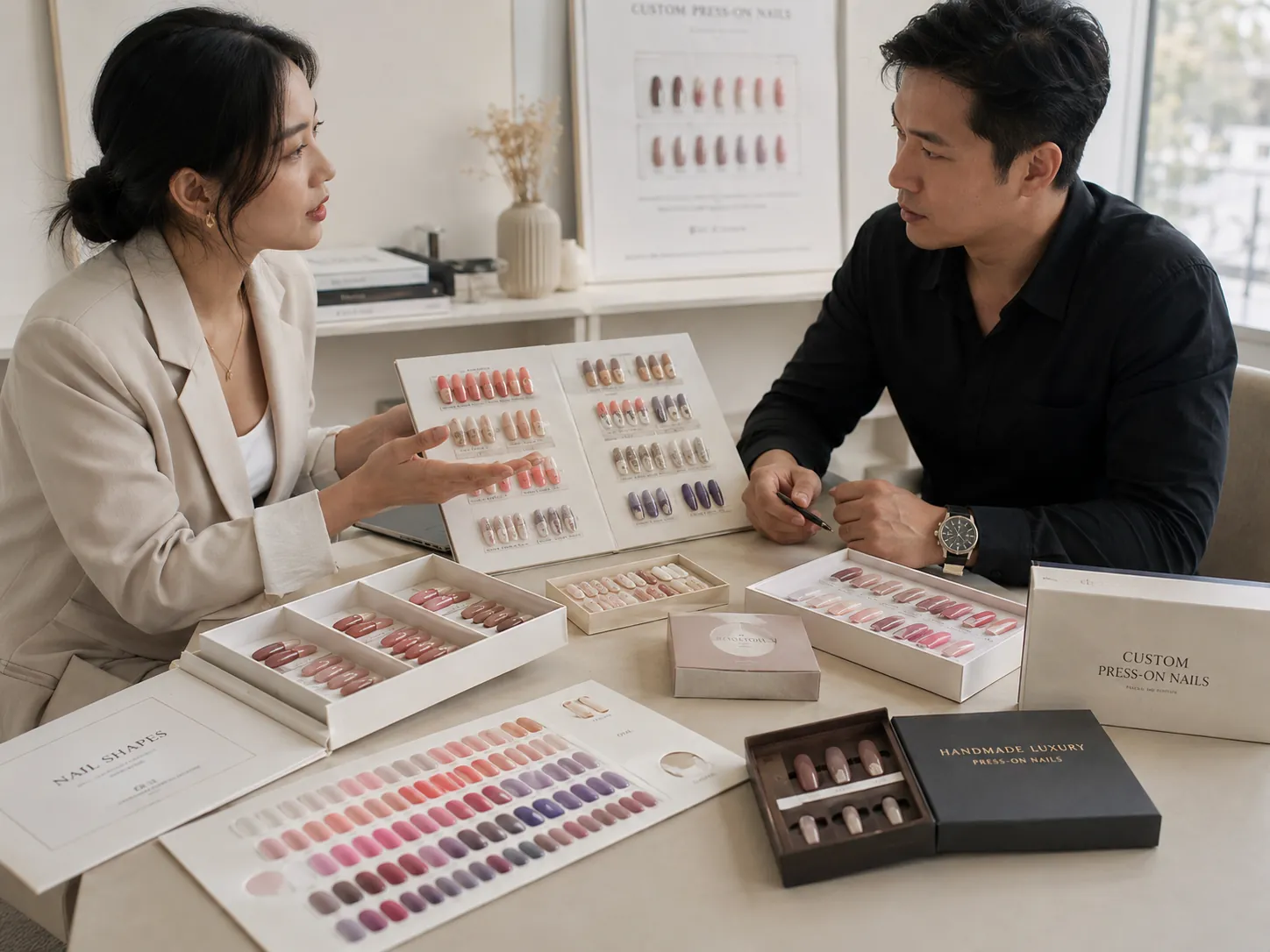
3. What Can Be Customized in a Press On Nails Project?
Nail Shapes and Lengths
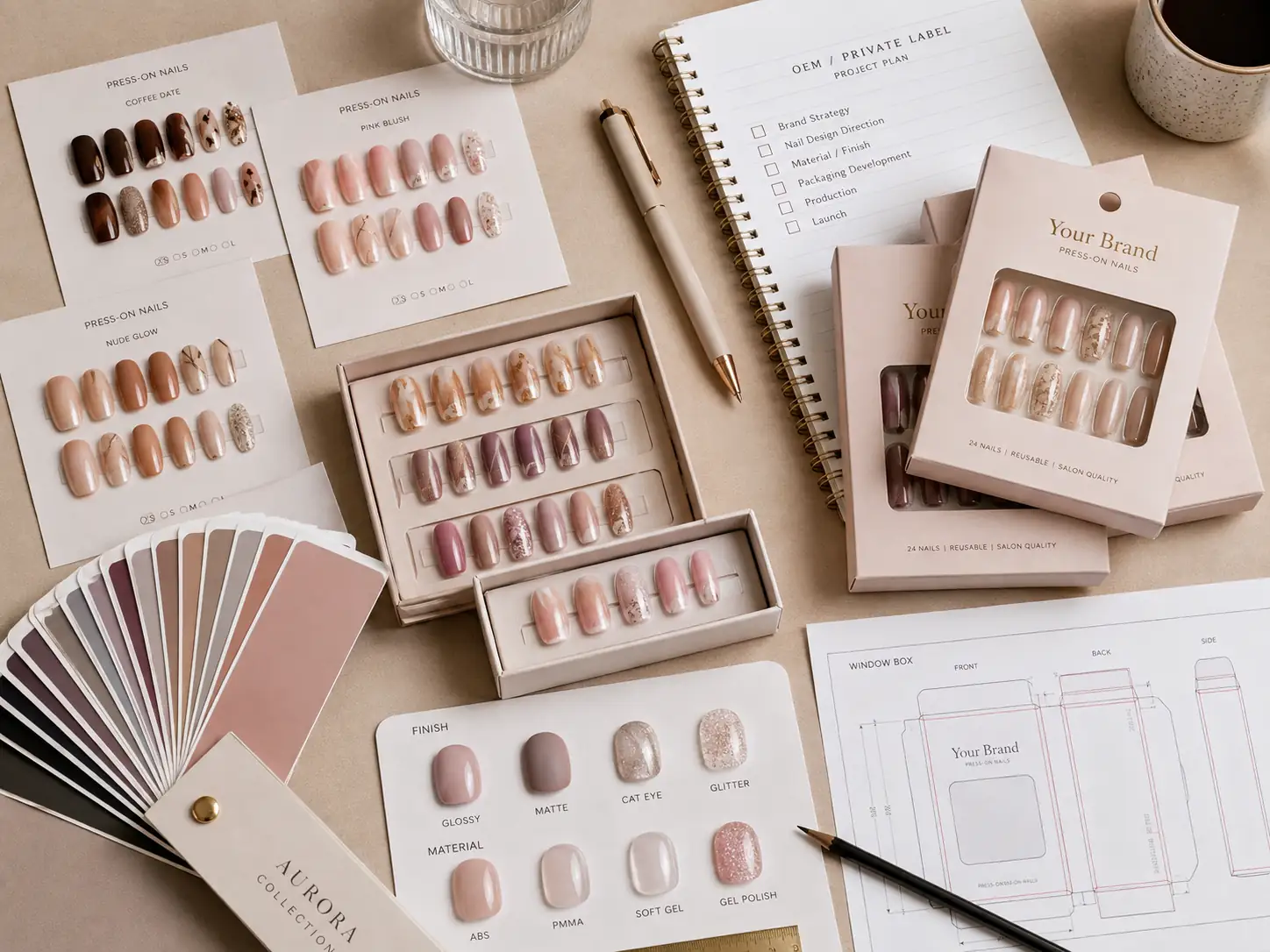
Available options may include almond, coffin, square, oval, and stiletto shapes in short, medium, long, or extra-long versions. Buyers should confirm shape consistency across the complete size range and whether the preferred shape is compatible with the intended material, design, and size assortment.
Colors and Finishes
Projects may involve solid colors, French designs, gradients, matte, glossy, shimmer, pearl, chrome, or cat eye finishes. Screen images alone are not a dependable production reference because displays render colors differently. Use a physical reference, approved sample, or agreed color standard, and record which reference controls bulk production.
Nail Art and Decorations
Customization may include printing, French tip variations, gradients, hand-painted details, metallic elements, glitter, rhinestones, charms, and 3D decorations. Technical feasibility depends on the design, material, decoration method, required consistency, packaging protection, and order structure. Complex decorations may require more sampling, manual work, inspection, and protective packaging.
Size Assortments
Confirm the number of sizes in each set, the quantity of each size, and the supplier's size chart. The approved assortment should be included in the final specification and retained for repeat orders. If the target market has specific size preferences, state them before sampling.
Private Label Packaging
Packaging may include boxes, sleeves, inner trays, windows, insert cards, instruction cards, labels, logo placement, accessory layout, and transit protection. Product and packaging development should be coordinated because nail length, decoration height, accessory placement, and tray dimensions affect the final package. Buyers comparing box formats, branding files, and order quantities can review our custom press-on nail packaging guide.
Labels, Barcodes, Inserts, and Accessories
A branded packaged product may require SKU labels, barcodes, market-specific product information, instruction cards, adhesive tabs, nail glue, preparation tools, or other accessories. Confirm which party supplies artwork, translations, barcode data, accessory specifications, and any information required for the buyer's market.
4. How a Custom Press On Nails Project Moves From Inquiry to Production
A clear workflow reduces specification gaps and makes approval responsibilities easier to manage.
Submit Project Information
Provide reference images or original artwork, preferred shapes and lengths, colors and finishes, number of styles, estimated quantity, packaging requirements, target market, and delivery destination. Undecided items should be identified clearly rather than left for the supplier to assume.
Confirm Product and Packaging Specifications
Record the nail shape, length, colors, finish, decoration, size assortment, packaging, accessories, labels, and barcode requirements in one written specification. Both parties should work from the same version.
Develop the Initial Sample
The factory reviews materials, color references, decoration methods, and packaging requirements before producing the first sample. Sample cost and timing depend on the design, materials, decoration, packaging, and revision requirements.
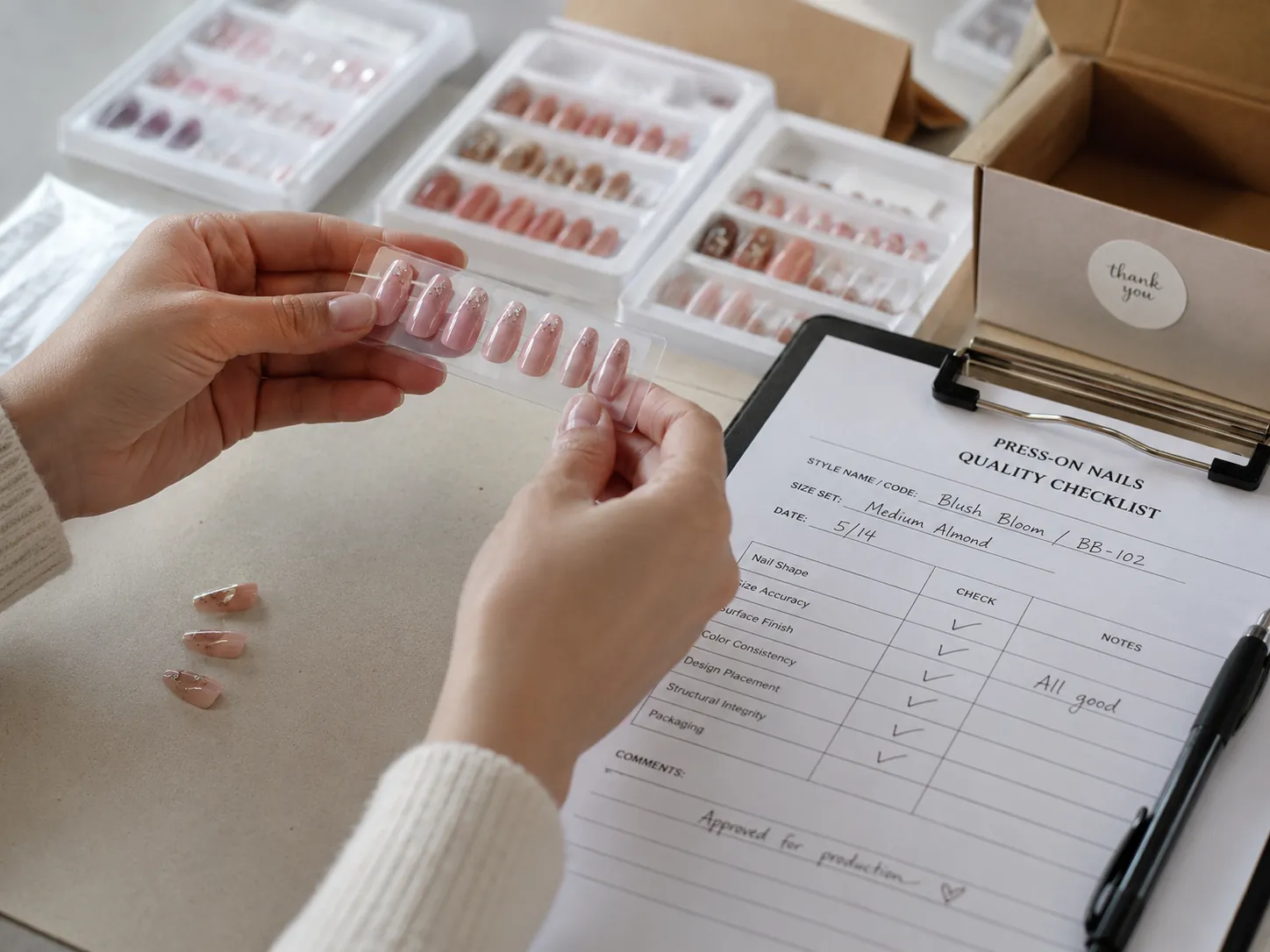
Review and Record Revisions
Feedback should identify the exact issue: color tone, transparency, placement, shape, finish, decoration, size arrangement, or packaging fit. Label each sample version and record product and packaging changes separately. Clarify which revisions are included and when a change becomes a new design request.
Approve the Production Reference
The final approved sample and written specification should become the production reference. Approval may cover design, colors, finish, dimensions, decorations, size assortment, packaging, accessories, labels, and agreed tolerances. Both buyer and manufacturer should retain the approved version.
Prepare Materials and Packaging
After approval, the factory prepares materials, custom colors, decorations, printed packaging, labels, inserts, and accessories. Specification changes at this stage may affect material use, packaging files, production planning, cost, or lead time.
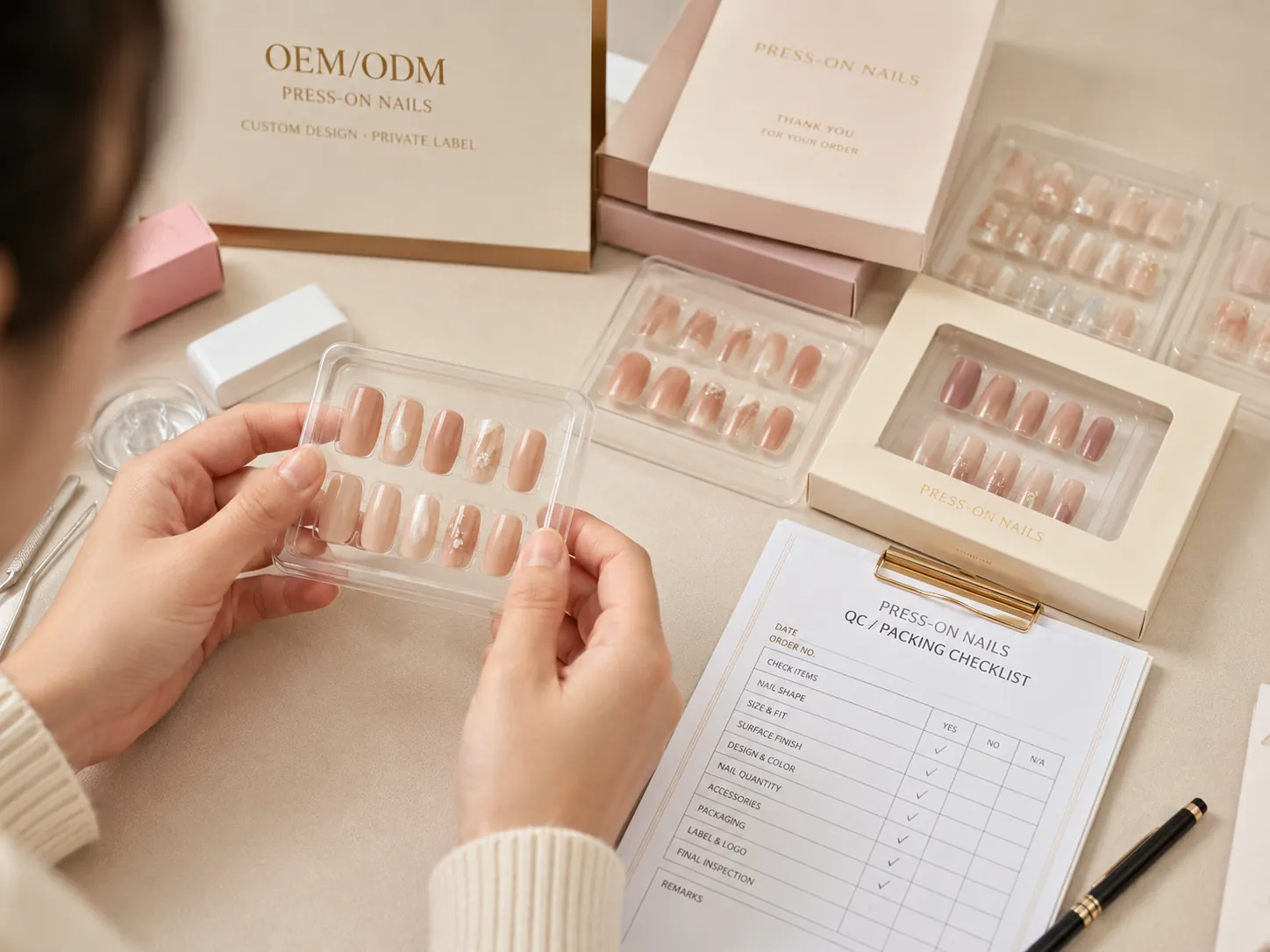
Complete Bulk Production and Inspection
Bulk production should be checked against the approved sample and specification. Inspection points may include color consistency, size accuracy, surface quality, decoration placement, set completeness, packaging accuracy, and accessory inclusion.
Confirm Packing and Shipment Preparation
Confirm carton quantities, shipping marks, labels, documents, delivery destination, and any pre-shipment inspection requirements. These details should be finalized before the goods leave the factory.
5. What Buyers Should Prepare Before Requesting a Quote
A structured inquiry reduces unnecessary clarification and gives the custom press on nails supplier a more accurate basis for reviewing the project. Use the checklist below before submitting your request.
Tick each item as it is confirmed. Open decisions can be marked “to be confirmed” in your inquiry.
6. What Affects MOQ, Cost, and Lead Time?
MOQ, cost, and production timing depend on the complete order structure rather than one product feature. Common variables include the number of styles, quantity per style, custom colors, decoration complexity, manual production steps, packaging structure, printing, labels, accessories, sample revisions, and production scheduling.
A useful quotation should state which parts of the project affect MOQ, pricing, or lead time and what is included in the quoted scope. This allows buyers to compare quotations on the same basis without turning this article into a detailed pricing guide.
7. Common Mistakes in Custom Press On Nails Projects
8. How AIERFEI Supports OEM and Private Label Projects
Buyers can use the workflow in this guide to evaluate AIERFEI or another manufacturer. AIERFEI supports project information review, specification confirmation, sample development, custom colors and nail art, private label packaging, labels and accessories, bulk production, quality inspection, and specification records for repeat orders.
9. Frequently Asked Questions
What is the difference between OEM and private label press on nails?
Private label usually starts from an existing product structure and focuses on branding, packaging, colors, finishes, or assortment changes. OEM starts from buyer-defined designs, specifications, artwork, or approved references. The dividing line is the scope of product development, not the label used by the supplier. Buyers should confirm which elements are existing, which are new, and who is responsible for development, sampling, packaging, and approval.
Can a manufacturer produce press on nails from my own designs?
A manufacturer may be able to develop press on nails from original artwork, reference images, or physical samples. Feasibility depends on the material, shape, color, finish, decoration method, consistency requirements, packaging, and expected quantity. The supplier should review the design, identify technical constraints, and produce a sample before the buyer approves bulk production.
What can be customized for private label press on nails?
Depending on the supplier and product structure, private label customization may include colors, finishes, size assortments, logo placement, labels, barcodes, packaging boxes, trays, insert cards, and accessories. New shapes, tooling, decoration methods, or technical structures may require a separate OEM development process. Confirm the available options and limitations in writing before sampling.
What information is needed before sample development?
Prepare reference images or artwork, shapes, lengths, colors, finishes, decoration requirements, size assortment, packaging direction, number of styles, estimated quantity, target market, and delivery destination. Logo files, barcode data, or final packaging text may follow later, but undecided items should be listed clearly so the supplier does not treat assumptions as approved specifications.
Should custom packaging be developed with the nail sample?
Coordinating packaging with the nail sample is usually more effective because the tray, box dimensions, accessory layout, and protection requirements depend on the product. Long nails, 3D decorations, and additional accessories may require more internal space or a different tray structure. Developing both elements together allows fit and presentation to be reviewed before bulk materials are prepared.
What affects MOQ and lead time for custom press on nails?
The main factors include the number of styles, quantity per style, custom colors, decoration complexity, manual processes, packaging structure, printing, labels, accessories, sample revisions, and production scheduling. The effect of each factor varies by project. Ask the supplier to explain which requirements are setting the MOQ and lead time and what changes could alter the order structure.
Start Your Custom Press On Nails Project
Prepare at least one reference design, preferred shapes and lengths, estimated quantity, number of styles, packaging requirements, target market, and delivery destination. AIERFEI can review the information and identify which product, packaging, sampling, and production details should be confirmed before quotation.
You can also contact the manufacturing team at sales@aierfeinails.com or through WhatsApp at +86 181 2201 8441.